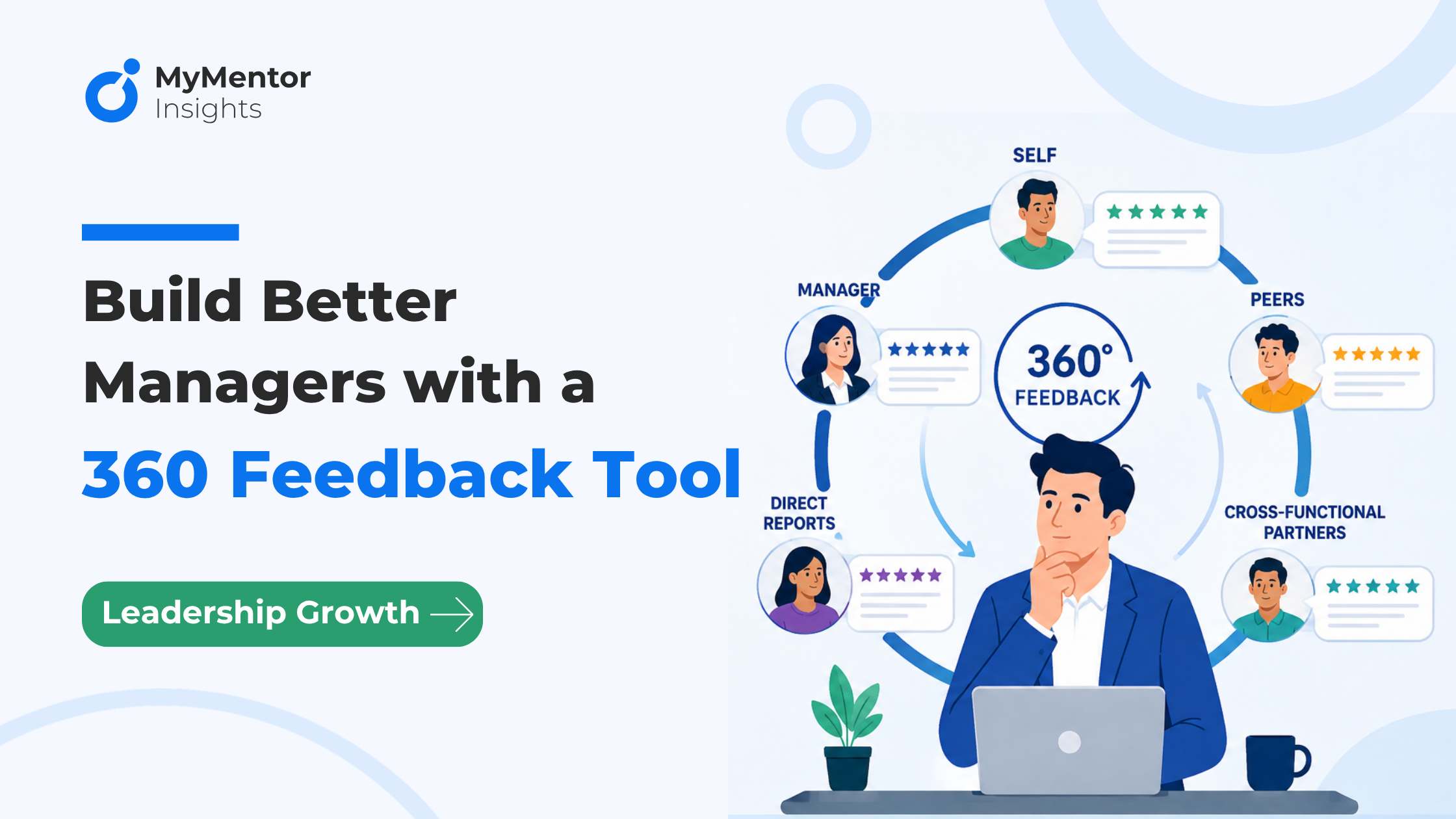
Stepping into a management role is one of the most challenging transitions in a professional career. Often, high-performing individual contributors are promoted to leadership positions without sufficient training, leading to a common phenomenon: new-manager failure. Understanding the pitfalls of this transition, and where a 360 degree feedback tool fits into the solution, is essential for organizational success.
The Peter Principle and the Reality of New Manager Failure
In many corporate environments, promotions happen vertically through the ranks. Someone is exceptionally talented at writing code, closing sales, or analyzing financial data, so they are rewarded with a promotion to team lead or manager. Suddenly, their daily reality shifts from executing individual tasks to orchestrating a team’s collective output.
Unfortunately, many new managers struggle because they attempt to do too much themselves, falling into the trap of micromanagement or refusing to delegate. They often lack the leadership competency assessment framework needed to understand their own hidden strengths, behavioral triggers, and glaring weaknesses. This is exactly the kind of structured insight a 360 degree feedback tool is built to provide.
Furthermore, the complete absence of a structured leadership development program leaves them navigating complex human dynamics, personality clashes, and performance metrics entirely without a compass. When a company drops a newly minted manager into the deep end without proper support, burnout ensues, not just for the manager, but for the entire team reporting to them. New managers frequently experience intense imposter syndrome, stress, and isolation. Without guidance, they lean heavily on authoritarian control or unstructured trial-and-error, both of which rapidly erode team trust.
Uncovering the Danger of Feedback Blind Spots
One of the most dangerous, silent killers of managerial effectiveness is the presence of feedback blind spots. In a traditional hierarchical structure, communication flows one way: downward. Executives talk to managers, and managers hand down instructions to employees. In this rigid setup, employees rarely feel safe telling their direct supervisor that their management style is counterproductive, intimidating, or disorganized.
When a new manager remains entirely unaware of how their day-to-day actions, tone, and decisions are actually perceived by their direct reports and peers, they cannot course-correct effectively. They might believe they are being decisive and driven, while their team experiences them as autocratic and dismissive. This is precisely where a 360 degree feedback tool becomes indispensable: without a clear mechanism to bridge this perception gap, small habits calcify into toxic cultural norms, driving down engagement and accelerating voluntary turnover. Recognizing these invisible communication barriers is the first step toward building resilient teams.
Ready to sharpen your leadership skills and eliminate blind spots? Explore our My Mentor AI solutions today.
Leveraging Multi-Rater Feedback for Holistic Growth
To systematically dismantle these blind spots and overcome transition challenges, modern progressive organizations are increasingly turning to a robust 360 degree feedback tool. Unlike traditional, biased top-down reviews where only a direct boss evaluates performance, multi-rater feedback provides a panoramic, holistic view of a manager’s true workplace impact.
By gathering anonymous, structured evaluations from multiple vantage points, including peers, cross-functional partners, direct subordinates, and senior leadership, the manager receives a balanced mirror of their capabilities. This multi-angled approach ensures that performance evaluations are objective, comprehensive, and immune to single-source bias or personal politics. A well-implemented 360 degree feedback tool turns this multi-source input into a single, coherent picture rather than a pile of disconnected opinions.
Moreover, this framework intentionally facilitates upward feedback, which is exceptionally important for new managers. Direct reports are the ultimate barometers of a manager’s day-to-day efficacy; they experience the practical consequences of delegation, communication clarity, and empathy firsthand. When paired with advanced leadership 360 software, organizations can seamlessly automate data collection, protect anonymity, and deliver comprehensive analytics that turn abstract qualitative observations into concrete, actionable developmental goals.
Need better insights into your team’s sentiment and leadership alignment? Use our advanced employee engagement survey tools to gain clarity.
Transforming Performance Reviews for Managers
For decades, the annual performance review has been treated as a corporate ritual—infrequent, highly stressful, backward-looking, and ultimately detached from real-time operational reality. For modern leaders, this archaic model simply does not work. [Performance reviews for managers] must evolve into continuous, data-backed cycles of growth rather than once-a-year judgment days.
When companies integrate a 360 degree feedback tool into their operational rhythm, leadership development transforms from an abstract HR initiative into a living, breathing practice. Continuous feedback loops allow new managers to track small behavioral adjustments over weeks and months rather than waiting twelve months to discover a fatal flaw in their leadership approach. This dynamic environment encourages psychological safety, experimentation, and rapid skill acquisition.
Want to build a high-performing feedback culture within your executive ranks? Contact us for a demonstration of our leadership assessment capabilities.
Also Read: What Are Feedback Blind Spots? (And Why Even Great Leaders Have Them)
Building a Sustainable, Resilient Management Culture
Ultimately, long-term success in management is rarely defined solely by technical expertise or industry know-how. True leadership excellence requires high emotional intelligence, deep self-awareness, active listening, and the unique ability to inspire, align, and elevate others.
When organizations invest in structured evaluation systems, they bridge the dangerous gap between a manager’s positive intent and their actual team impact. Cultivating this level of transparency significantly reduces preventable employee turnover, fosters resilient workplace cultures, and turns vulnerable first-time supervisors into confident, empathetic executive pillars.
Whether you are scaling a startup or optimizing a mature enterprise, supporting your managerial team with the right technological infrastructure dictates whether your organization thrives or stagnates under poor leadership. Equipping your leaders with actionable data transforms management from a guessing game into a measurable science.
Conclusion
The transition from an individual contributor to a people manager is fraught with hidden traps, psychological hurdles, and operational missteps. However, new manager failure is not an inevitable rite of passage; it is largely a symptom of inadequate preparation and a lack of self-awareness. By implementing a 360 degree feedback tool, embracing comprehensive feedback systems, and dismantling blind spots, organizations can empower their leaders to thrive. Cultivating a supportive culture anchored in objective data guarantees that your management team moves away from guesswork and toward confident, impactful leadership.
Frequently Asked Questions (FAQs)
- What is new manager failure, and why does it happen?
A: It happens when strong employees are promoted without enough leadership training, making delegation, communication, and team management difficult. - How does 360-degree feedback help new managers?
A: It gives managers anonymous feedback from peers, employees, and leaders, helping them identify blind spots and improve self-awareness. - How is multi-rater feedback different from a performance review?
A: Traditional reviews usually rely on one manager’s opinion, while multi-rater feedback collects perspectives from several people for a more balanced view. - How often should manager feedback assessments be conducted?
A: Quarterly or biannual feedback can help managers identify issues earlier and improve their leadership continuously. - What should organizations look for in a 360 degree feedback tool?
A: Look for anonymity, customizable competencies, multi-rater feedback, clear reporting, action planning, ease of use, and leadership development support.